- 4192 Devonwood Way, Ashburn, Virginia, 20148
- Helpline: +1 (703) 665-3747
Knowledge and Beliefs of Women for the Abortions’s Legislative Framework in Greece
- Home
- Back to Journal
- Article Details
Abstract
Introduction: Undoubtedly abortion is one of the most burning issues in the field of Bioethics. Although it has been legally settled in several countries with the enactment of women’s right to abortion, the moral nature of the issue remains unclear and controversial. The term abortion describes the voluntary or artificial termination of pregnancy before fetal viability [1].
Aim: The purpose of this study is to assess the knowledge and attitudes of women about the legal framework of abortion, with the ultimate purpose of creating an action plan aimed at preventing women’s exposure to this process by informing rights, potential risks of abortion and contraceptive methods.
Methods: This study was conducted from May 2015 until October 2015 at a Public Hospital in Athens, Greece. A questionnaire was given to 224 women, but it was completed by 210 women. 14 women refused to complete the questionnaire. Prior to completing the questionnaire, women were informed both in writing and orally about the content and purpose of the research. The statistical analyzes of the descriptive study were performed using SPSS 12.
Results: In the present study, 25.2% (n=53) women had an abortion, while 71.4% (n=150) did not. From the present survey appeared that only a rate (41.0%) has been informed the Legal Framework about abortion while a very large percentage (59 .0%) has not informed. The source of information for 41.9% of women was from the family environment, 29.0% from a friendly environment, 23.3% from the media and 12.4% from the press. Finally, only 20.0% mentioned health professionals as their source of information.
Conclusion: It is necessary to create groups of health professionals who will inform women from adolescence in schools about contraception and abortion. The main concern of the state should be the staffing of the already existing Primary Health care structures and the creation of new ones where it is deemed necessary.
Keywords: Abortion, Knowledge, Legislation in Greece
Introduction
Abortion is a global, multifactorial issue with a variety of implications, which raises intense social and scientific concerns, making it impossible to regulate it permanently and statically. The reduction of the influence of religious beliefs along with the development of medical science [2, 3] and antenatal care, [4] the integration of women in the economically active part of the population [5] and the increase of living standards with emphasis on the coupling of social and individual progress have a decisive influence on the institutional treatment of abortions . Abortion is defined as legal only if it is performed by an authorized health professional within the limits of state law and is directly linked to the woman’s choice, as a central pillar of the reproductive process [6]. The key approach to the issue of abortion is inextricably linked to the fundamental legal rights of human life, health, and freedom with the contribution of medical science [7].
Aim
The purpose of this study is to assess the knowledge and perceptions of women, the demographic factors that may affect their views and knowledge of legislation regarding abortion, and identify the emotions that prevail after the termination of the pregnancy.
Material and Methods
The study took place in a Greek University hospital in the period May – October 2015. An anonymous, structured questionnaire was given to 224 women while 14 women refused to complete it. Before completing the questionnaire, the women were informed both in writing and orally about the content and purpose of the research. After being informed, they were asked to sign the consent form for the research. The questionnaire recorded the demographic data of women and their perceptions of abortion. In addition, women were asked if they were aware of the legal framework for abortion in Greece, their perceptions of abortion, their feelings after termination of pregnancy, and their attitude towards a familiar person, who had an abortion. Statistical analyzes of the descriptive study were performed using SPSS 12.
Results
The age of the respondents who participated in the research was between 18 and 55 years, with the majority 25.2% (n = 53) of them ranging between 26 and 30 years . Regarding the marital status of women, 57.6% (n = 164) declared married, while 36.7% (n = 46) declared unmarried. The largest percentage of females (56.2%) (n: 118) had offspring, specifically 29.0% had 1 child, 22.4% had 2 children, 3.8% had 3 children and only 1.0% had 4 or more children. A large percentage of women (49.5%) (n = 104) had a university degree, while 39.0% (n = 82) were high school graduates. 1.9% (n = 4) had not completed even the basic compulsory education, while only 3.3% (n = 7) managed to complete it. The majority of women 52.4% (n=110) had a monthly family income below 1000 euros, while only 6.2% (n = 13) stated that they received more than 3000 euros per month. The vast majority of these women (82, 9%) (n = 174) were Greek women while 17.1% (n=36) were of other nationalities.
According to the answers given by the participants, 30.0% (n = 63) were private employees, 15.7% (n = 33) civil servants, 7.1% (n = 15) freelancers, while 43.3% (n = 91) stated that they do not work. Regarding the religion of women, the largest percentage of 90.0% (n = 189) were Orthodox Christians.
Knowledge and Attitudes of Women Regarding the Practice of Abortion
When asked if they know what abortion means, the vast majority 95.7% (n=201) answered positively, while only 3.8% (n = 8) answered negatively to the question. Regarding the age when they first heard what abortion is, a fairly large percentage of 82.9% corresponded to the ages 13–20 (n = 174), 16.2% (n = 34) to the ages 21–30, and 1.0% (n = 2) in the ages 31–40 .From the family environment 41.9% of women had heard about abortion, 29.0% from the friendly environment, 23.3% from the media, and 12.4% from the press. Finally, only 20.0% stated that the source of information about abortion was health -professionals. A rate of 71.4% (n = 150) answered that they had not terminated a pregnancy in the past, while 25.2% (n = 53) answered positively. Finally, 3.3% did not want to answer. When asked if they know the legislation in Greece regarding abortion, the minority (41.0%) stated that they know the legal framework, while 59.0% did not know about it. The women were asked to answer the question if there is a limit of weeks of pregnancy by which an abortion can be performed, 72.4% answered positively, 25.2% answered that they do not know, while 2.4% did not want to answer. In the next question in relation to the reasons that can lead a woman to the decision to terminate the pregnancy, a percentage (80.0%) considered the financial reasons as the main reason, while following the desire of the woman (70.0%), the medical reasons (63.3%), age (62.9%), social reasons (61.0%) and finally moral reasons (52.0%). (Table 1).
Table 1: in your opinion what reasons lead a woman to termination of pregnancy?
|
|
YES |
NO |
|
Financial reasons |
80.0% |
20.0% |
|
Social reasons |
61.0% |
39.0% |
|
Ethical reasons |
52.0% |
48.0% |
|
Medical reasons |
63.3% |
36.7% |
|
Woman’s desire |
70.0% |
30.0% |
|
Age |
62.9% |
37.1% |
In a question about feelings that a woman would feel if she had an abortion, the largest percentage (76.6%) thought that a woman would feel sad while 37.6% answered that she would feel fear (Table 2).
Table 2: What feelings do you think a woman would feel if she had an abortion?
|
|
YES |
NO |
|
Shame |
31.9% |
68.1% |
|
Anger |
17.6% |
82.4% |
|
Affliction |
76.7% |
23.3% |
|
Fear |
37.6% |
62.4% |
|
Desperation |
26.2% |
73.8% |
|
Indifference |
6.2% |
93.8% |
|
Embarrassment |
13.3% |
86.7% |
|
Relief |
19.0% |
81.0% |
|
Repentance |
33.3% |
66.7% |
|
Other |
3.8% |
96.2% |
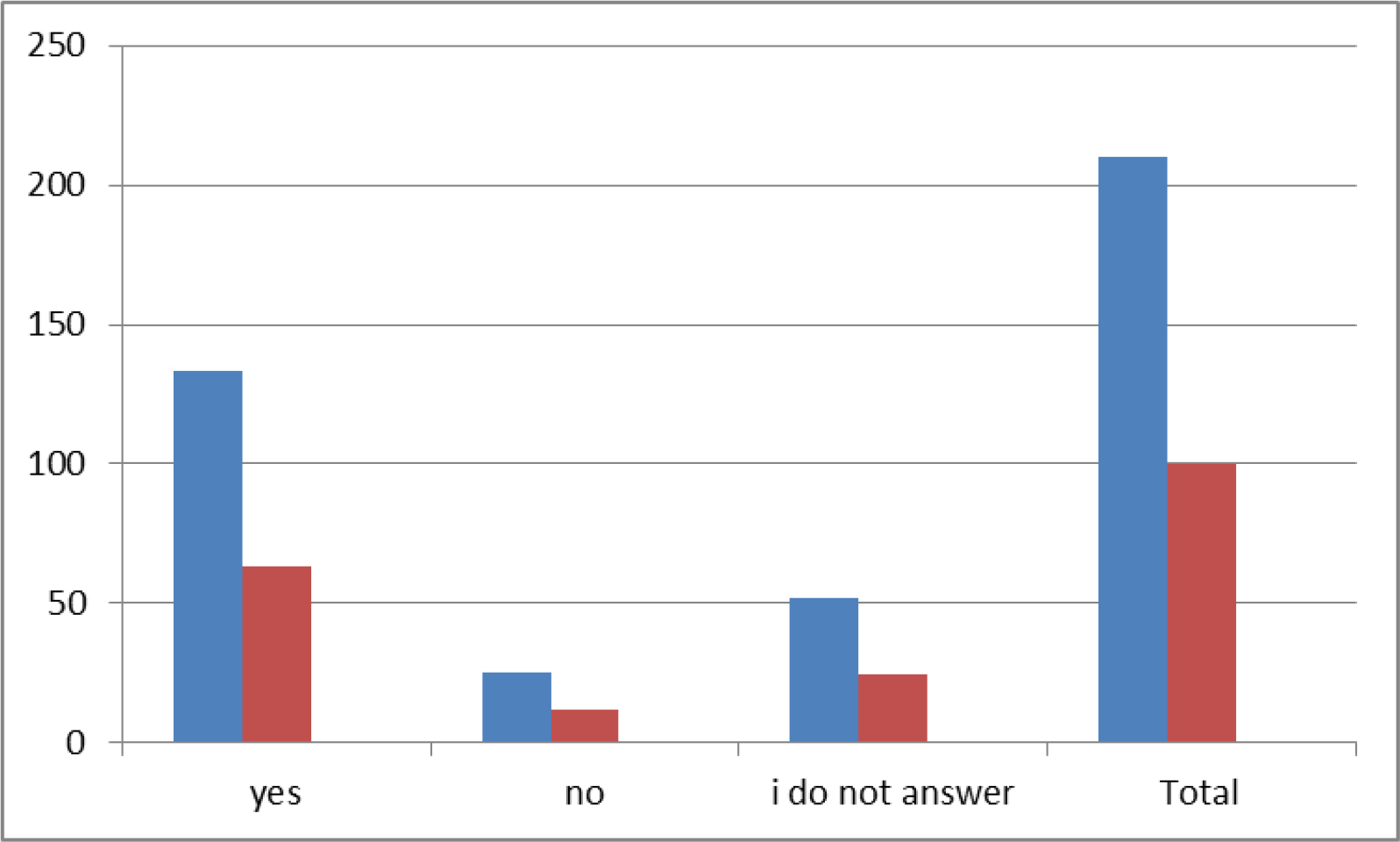
In addition, 63.3% of women said that if the fetus had a serious health problem, they would terminate the pregnancy. On the contrary, 11.9% answered negatively to an abortion in case of a possible fetal problem. Finally, 24.8% did not want to answer this question (Table 3).
Table 3: If your fetus had a serious health problem, would you terminate the pregnancy?
Information and Psychological Effects of Women who have had an Abortion
The women who had abortions were asked to answer the question of why they terminated their pregnancies. A rate of 43.6% answered that the pregnancy was undesirable. In addition, 23.6% reported medical reasons, 18.2% financial reasons while 12.7% stated because they were unmarried and 1.8% stated that the fetus was from rape. The vast majority of women (80.0%) said they were informed about the procedure before the abortion while 20.0% were not informed. When asked about their subsequent psychological state, the majority of women 74.5% felt sadness, 18.2% repentance and shame, 16.4% anger and relief, 10.9% fear and despair, 3, 6% embarrassment while 1.8% felt indifference.
Discussion
The abortion, though not classified as a method of contraception, both in Greece and in some other countries, it seems to take this form, as demonstrated by the enormous number of abortions annually. Indicatively in Greece, in the year 2001, one in four women of childbearing age had at least one unwanted pregnancy that led to abortion because of lack contraception. [8] In our survey in 2015, a similar percentage was found as 25.2% stated that they had terminated at least one pregnancy. Research conducted in Canada [9] to 423 women, 60,0% were informed about abortion by health professionals, 14.8% from Internet, 5.3% from their family and friendly environment, while 12.3% cited other sources. In contrast to the survey conducted in Greece Maternity Hospital where 41.9% of women stated that they had heard of abortion from their family environment, 29.0% from the friendly environment, 23.3% from the media, and 12.4% from publications. Finally, only 20.0% stated that the source of information about abortion was health professionals. The survey of Kumar [10] in dilemma about whether to proceed with abortion consulted their family and friendly environment, which is common with this study, since women said their biggest influence was the family environment 63.3%, in terms of their attitude and opinion about abortion, while only 18.6% said they were friendly.
Opinion of the Social Affairs Committee (1603/2008) of the Council of Europe on safe access to legal abortions, states that the ban on abortions does not lead to fewer abortions but mainly to illegal abortions, [11] which end up being more traumatic and increasing maternal mortality [12] or lead to costly “tourism” in search of a place to perform the abortion, while delaying the abortion schedule creating social inequalities. Increased rates of adolescent births, abortions, and Sexually Transmitted Diseases (STDs) are commonly associated with incomplete or insufficient sex education [13]. The current data are in line with the above argument, as shown by the higher rates of births and abortions in adolescents [14]. Historically, the legislative approach to this issue has varied in time and state, which has provoked intense public debate, with particular scientific interest, as there is a different approach, depending on ethical and social perceptions, demographic and economic factors, technological progress and medical developments [15, 16]. Attempts to categorize abortion laws and policies, especially the reasons for legal abortion, began in the 1960s, resulting in the publication of enough global databases from the mid-1970s provided information [17–20] on country-specific abortion legislation and can facilitate the understanding of the legal regulation of the issue, classifying countries that fall within a hierarchical range of access to abortion, depending with the number and type of conditions under which abortion is allowed.
In the Greek post-war history, events that influenced the regulation of the issue of abortion were the right of women to vote in 1952, the shift of interest towards contraception in the 1960s, the change of the Greek constitution in 1975. The law 821 / 1978 [21] provided the legal termination of pregnancy without a time limit in the event of a threat to the life or health of the woman, up to the 12th week due to a psychiatric indication and up to the 20th week due to an indication of fetal pathology. In 1986 with law 1609/1986 [22] abortion was allowed for first time until the 12th week due to the woman’s self-disposition and was extended to the 24th week due to fetal pathology. In addition, it is allowed until the 19th week in case of rape or incest. Greek legislation in the recent modification of Criminal Code, in law 4619/2019 [23] Article 304 extends unlimited the time frame [24] of the option of termination of pregnancy, in the case of indication of a pathological fetus according to the standards of other European codes, such as the Austrian. [25] The artificial termination of pregnancy is not an unjust act by an obstetrician-gynecologist with the participation of an anesthesiologist, in an organized nursing unit, if, there are signs of a serious fetal abnormality that induces the birth of a pathological newborn or there is an unavoidable risk to the life of the pregnant woman or a risk of serious and permanent damage to her physical or mental health. In this case, a relevant certificate of the competent doctor is required.
Conclusion
Proper and timely, from pre-adolescence and adolescence, sexual and reproductive education is of great importance, because may contribute to a considerable reduction in the number of abortions, especially by the prevention of this problem [26] and not with its treatment. Measures aimed at reducing the incidence of an unwanted pregnancy and consequently unsafe abortions, combined with investing in family planning services and a safe abortion procedure, [27] are decisive steps in achieving its developmental aims. Therefore, every government is called upon to take the necessary precautionary measures in conjunction with ensuring timely and affordable access to safe abortion, [11] in addition to comprehensive information and oriented advice on reproductive and sexual health. [28] More efforts are necessary in order to provide more sufficient education on effective contraception and family planning [29].
References
- Tsikouras P, Deftereou T, Anthoulaki X, Bothou A, Chalkidou A, et al. (2019) Chapter: Abortion and Reproduction – A Modern System of Management. Abortions in First Trimester Pregnancy, Management, Treatment. Intech Open. [View]
- Psaroulis D, Voultsos P (2010) Medical Law Elements of Bioethics, University Studio Press Pg. No: 167–169.
- Kotzamanis, Byron (1988) The Reproduction of the Greeks: Myths and Reality (II. The Course of Marital Fertility in the Postwar Period: Trends, Perspectives and Questions Arising from the Dominant Interpretive Figures of Its Declining Course). Social Research Review 71: 64.
- Friedman JM (1974) Legal implications of amniocentesis. Univ PA Law Rev 123: 92–156. [View]
- Pakseresht Sedigheh, Rasekh Pegah, Leili Ehsan Kazemnejad (2018) Physical Health and Maternal-Fetal Attachment among Women: Planned Versus Unplanned Pregnancy. International Journal of Women’s Health and Reproduction Sciences 6: 335–336. [View]
- Matalliotakis I, Cakman H, Dermitzaki D, Zervoudis S, Goumenou A, et al. (2008) Increased rate of endometriosis and spontaneous abortion in an in vitro fertilization program: no correlation with epidemiological factors. Gynecol Endocrinol 24: 194–198. [View]
- Joyce T, Kaestner R (2000) The impact of Mississippi’s mandatory delay law on the timing of abortion. Fam Plann Perspect 32: 4–13. [View]
- Ioannidi-Kapolou Elizabeth (2004) Use of Contraception and Abortion in Greece: A Review. Reproductive Health Matters 12: 174–183. [View]
- Wiebe ER, Sandhu S (2008) Access to abortion: what women want from abortion services. J Obstet Gynaecol Can 30: 327–31. [View]
- Kumar U, Baraitser P, Morton S, Massil H (2004) Decision making and referral prior to abortion: a qualitative study of women’s experiences. J Fam Plann Reprod Health Care. 30: 51–4. [View]
- Parliamentary Assembly (2008) Access to safe and legal abortion in Europe- Resolution 1607. [View]
- Global Policy Committee of the WHO (1994) Position Paper on Health, Population and development for the International Conference on Population and Development, Cairo 5–13 September 1994, p. 27. [View]
- Sexually Transmitted Infections in Europe 1990–2010 Surveillance Report European Center for Disease Prevention and Control, Stockholm: ECDC; 2012. European Center for Disease Prevention and Control (June 2012). [View]
- Deligeoroglou E, Christopoulos P, Creatsas G (2004) Pregnancy and abortion-In greek adolescent Gynecologic clinics Akush Ginekol (Sofiia). 43 4: 37- 40. [View]
- Harris S, et al, (2018) Screening for fetal chromosomal and subchromosomal disorders. Semin Fetal Neonatal Med 23: 85–93. [View]
- Palomaki G, Kloza E et al. (2017) The clinical utility of DNA-based screening for fetal aneuploidy by primary obstetrical care providers in the general pregnancy population. Genet Med. 19: 778–786. [View]
- Johnson, B et al, (2018) Global Abortion Policies Database: a new approach to strengthening knowledge on laws, policies, and human rights standards. BMC Int Health Hum Rights : 18. [View]
- Sedgh G et al (2016) Abortion incidence between 1990 and 2014: global, regional, and subregional levels and trends. Lancet 388: 258–67. [View]
- Lavelanet et al. (2018) BMC International Health and Human Rights 18: 44. [View]
- http: //ghdx.healthdata.org/record/annual-review-population-law-database-abortion-laws- world
- Official Journal of the Government 173/1978
- Official Journal of the Government 86 A / 86
- Official Journal of the Government 95 / A / 11-6-2019, Criminal Code article 304.
- Sarella Angeliki (2020) The Effect of Prenatal Diagnosis in the Current Change of the Criminal Code in Greek Abortion Law, Review Clinical, Pharmacology and Pharmacokinetics. Greeke edicion 38: 145–150. [View]
- Sareidakis E (2008) Bioethics, Ethical problems of new biomedical technologies. Papazisis: 197. [View]
- Jatlaoui Tara C, Ewing Alexander, Michele G, Mandel K. et al (2016) Abortion Surveillance -United States, 2013. Surveillance Summaries MMWR 65: 13–14. [View]
- https: //www.europarl.europa.eu/doceo/document/A-7-2013-0426_EN.html
- European Parliament (2013) Explanatory Memorandum on Sexual and Reproductive Health and Related Rights 2013/2040 (INI). Committee on Women’s Rights and Gender Equality P: 18. [View]
- Tsakiridis I, Mamopoulos A, Athanasiadis A, Dagklis T (2020) Trends in Induced Abortions in Greece: A Cross-sectional Study. Journal of Pediatric and Adolescent Gynecology 33: 149–152. [View]