- 4192 Devonwood Way, Ashburn, Virginia, 20148
- Helpline: +1 (703) 665-3747
Disruption and Opportunities in Academic Foundation Training (AFP) During the COVID-19 Pandemic in the United Kingdom: A Nationwide Service Evaluation Survey
- Home
- Back to Journal
- Article Details
Abstract
Objectives: The impact of COVID-19 on the Academic Foundation Programme (AFP) is unprecedented. We conducted a nationwide (United Kingdom) service evaluation project to ascertain the level of disruption and opportunity borne out from this global pandemic.
Methods: An anonymous, non-validated questionnaire was designed and distributed electronically to all AFP doctors working in the UK. Participation was voluntary. The questionnaire was designed to capture individual doctor’s views of their training turbulence or otherwise as a result of the COVID-19 pandemic.
Results: 196 doctors took part in the survey with 11 out of 20 UK foundation school deaneries represented. 73% of all responders were research focused academic foundation trainees. 82% of doctors did not rotate as planned during the crisis. 51% of responders reported losing academic time, with a third of this group losing their entire four month long academic block. Almost all doctors (93%) told us they had lost out on educational activities. Notably, almost 25% of doctors told us the pandemic had resulted in a positive experience for their academic work as they gained unique opportunities to partake in cutting edge research, leadership or educational delivery.
Conclusion: This service evaluation has demonstrated the reduction of planned academic activity during the COVID-19 crisis for AFP trainees. Whilst this is understandable, many doctors expressed concern about future unknowns with respect to their academic training and future career progression. The authors recommend this warrants further consideration. However, beyond redeployment and cancellation of projects, almost a quarter of doctors accessed COVID-19 research opportunities and capitalised positively during this difficult time.
Keywords: Medical Education, COVID-19, Academic training, Disruption, Opportunities
Introduction
During the COVID-19 pandemic, Health Education England (HEE) cancelled all planned rotation changes that were due to take place in April 2020 for foundation doctors, including the academic tracks [1]. The sentiment behind this was to minimise service disruption and maintain safety during the predicted peak of the COVID-19 pandemic in the UK [2]. Recent literature cites that the COVID-19 crisis has negatively impacted many aspects of healthcare education provision around the world [3], yet ironically has also provided opportunities such as cutting-edge research and medical students becoming stakeholders in the expansion and delivery of healthcare [3,4]. Following on from previous research, our work aimed to evaluate the impact of COVID-19 for AFP doctors in the UK in respect to educational activities. We specifically focussed on academic foundation trainees because this cohort of newly qualified doctors embark on a training programme with protected time in built for research, leadership and education. We recognised that potentially the loss of opportunity may be greater, both now and in the future for this cohort than in some other training groups. Although, all grades of doctors potentially have been affected in response to their educational training.
Currently, there are an estimated 16,000 foundation programme trainees working in the UK across 20 foundation schools. Approximately 7% (1130) of these trainees are on the academic foundation programme [5]. The programme is highly selective and competitive - attracting graduates who might like to become a researcher, educator or manager of the future [6]. It is a two year postgraduate training programme (F1 and F2). The design of the two-year long AFP varies across each foundation school. Some programmes have integrated academic time (e.g. one day a week) throughout the two years, whilst other programmes are designed with a dedicated four month rotation purely for academic activities (usually within the second year of the AFP) [7]. Most of the AFP tracks are themed around leadership, education or research. Outputs range from conducting original research in laboratory or clinical settings to design and delivery of teaching programmes.
Redeployment to front line services and planned cancellation of education during the COVID-19 crisis has meant that some trainees missed their four-month academic block, whilst others had integrated academic time cancelled to ensure adequate staffing [8]. As a result, some UK academic foundation doctors have lost out on unique opportunities to develop additional skills in medical research, teaching and leadership as the programme intends [9]. Examples of educational changes include redeployment of practising doctors and educators to clinical care, closure of medical schools and universities to maintain social distancing, face-to-face workshops being cancelled as well as suspending research clinical attachments [10]. It is entirely possible in the future that these missed opportunities may result in the haemorrhage of academic doctors; an area of concern widely reported in scholarly literature as numbers of doctors following career paths in academic medicine have been declining [11]. Conversely though and perhaps unexpectedly, several academic doctors have been fortunate to partake in cutting edge COVID-19 research as well as developing new skills such as using technology to provide medical education, which may be the vision moving forwards [10]. Where there is loss, there is gain and some may be inspired by new opportunities.
We aimed to explore in more detail the level of disruption caused to our academic foundation trainees. We believe this is important to help identify those trainees who may extend training to complete academic projects and those who may decide to leave the world of academic medicine as a result of this experience.
Materials and Methods
We designed and circulated an anonymous questionnaire to capture AFP experiences of their training disruption during the COVID-19 crisis. Participation was voluntary. The survey was designed using Google forms, an online survey tool and was piloted by two academic trainees before launch. Distribution of the survey was via the heads of all 20 foundation schools in the UK. Data was collected during May and June 2020 with two reminder emails sent during this time.
There were 15 questions with a final free response statement with the opportunity to share any other experiences during the COVID-19 time. The first part of the survey was designed to collect basic demographic information; foundation year, deanery and base hospital. The second part of the survey enquired about redeployment. The final section gave an opportunity to share views on the impact of the pandemic on academic training by a free text response. The list of questions can be accessed in appendix [1]. Not all of the questions were mandatory.
Data from the survey was exported into an excel spreadsheet. Analysis of qualitative data was performed using content analysis. Two independent analyses of the qualitative data were performed, the results of each analysis were then compared to strengthen reliability of the data analysis. Quantitative data was analysed using descriptive statistics.
Results
Part 1: Quantitative Data
In total, the response rate of the survey was 196/11301 (17%). Summary table of results is available in the appendix. The survey received responses from AFP trainees in 11 out of the 20 foundation schools across the UK – distribution as shown in figure 1 (white areas represent zero responses). The survey received responses from trainees at 66 individual hospitals. Slightly more FY1s than FY2s participated (57% FY1, 43% FY2). The majority of trainees were on a research themed track (73%).
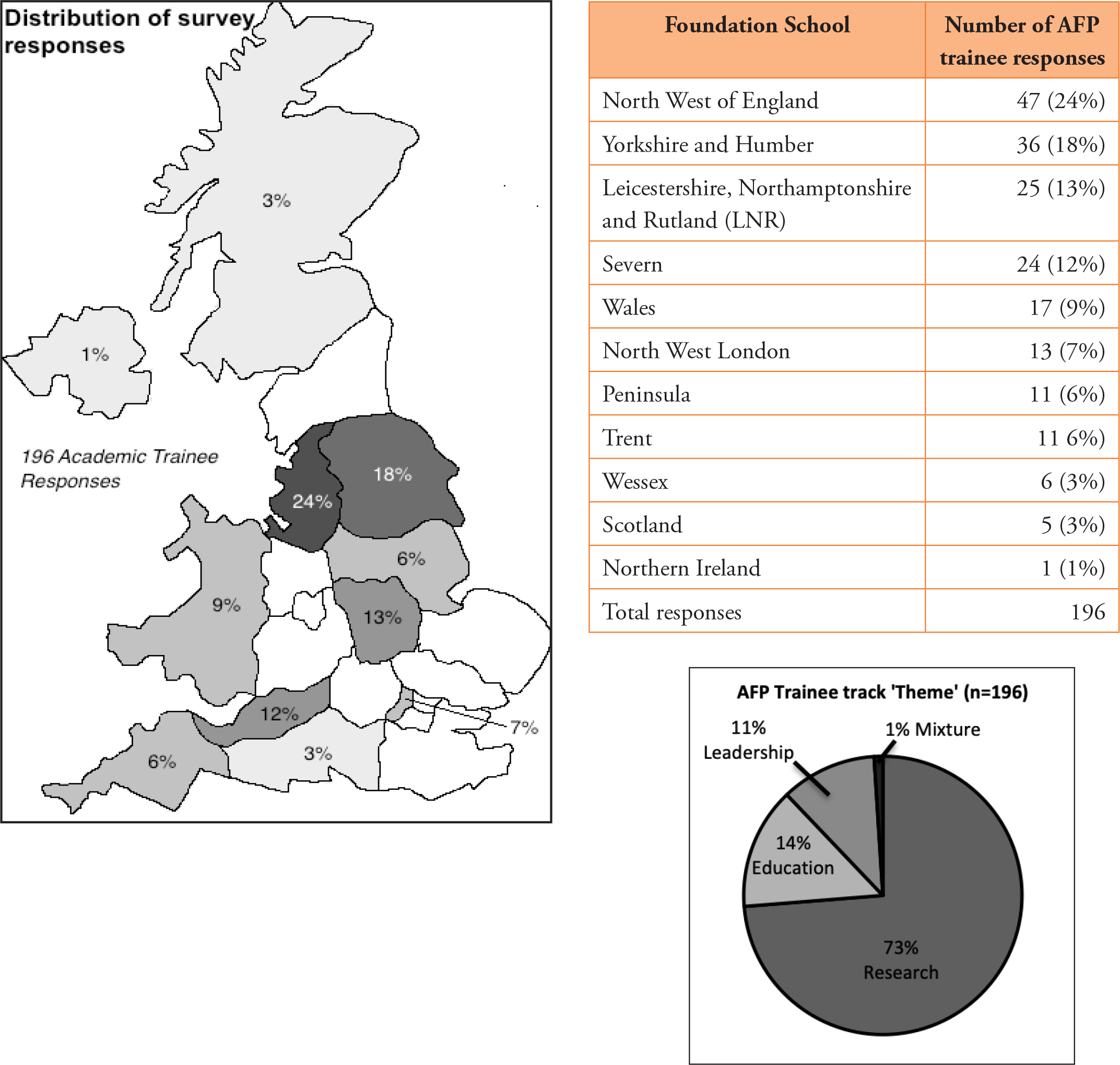
Figure 1. Distribution of Responses from Academic Foundation Programme Trainees according to their foundation school. Survey received responses from trainees within 11/20 foundation schools. White areas on graphic represent foundation schools with 0 responses.
The majority of trainees (82%) did not rotate as planned, as shown in figure 2, Out of the trainees that left their original placement, most were redeployed to medical or COVID wards, as shown in figure 3. 18% of trainees did rotate with ten trainees being allowed to move to academic blocks as planned. Over half of academic trainees had academic time cancelled, this ranged from the loss of a teaching session to missing an entire academic rotation. 24% of respondents reported weekly academic time being cancelled and 19% were unable to rotate to their academic block.
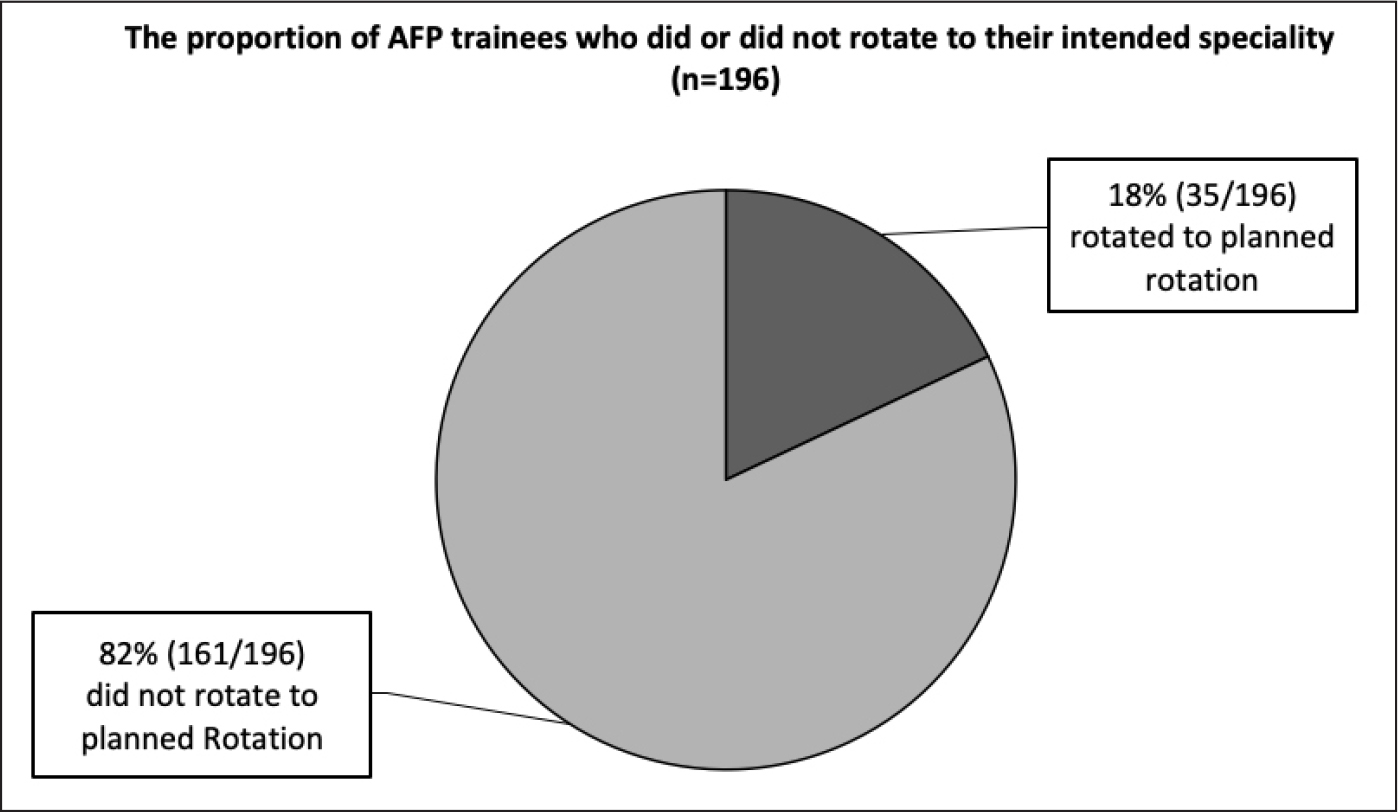
Figure 2. Showing the proportion of AFP trainees who didn’t rotate to their intended speciality.
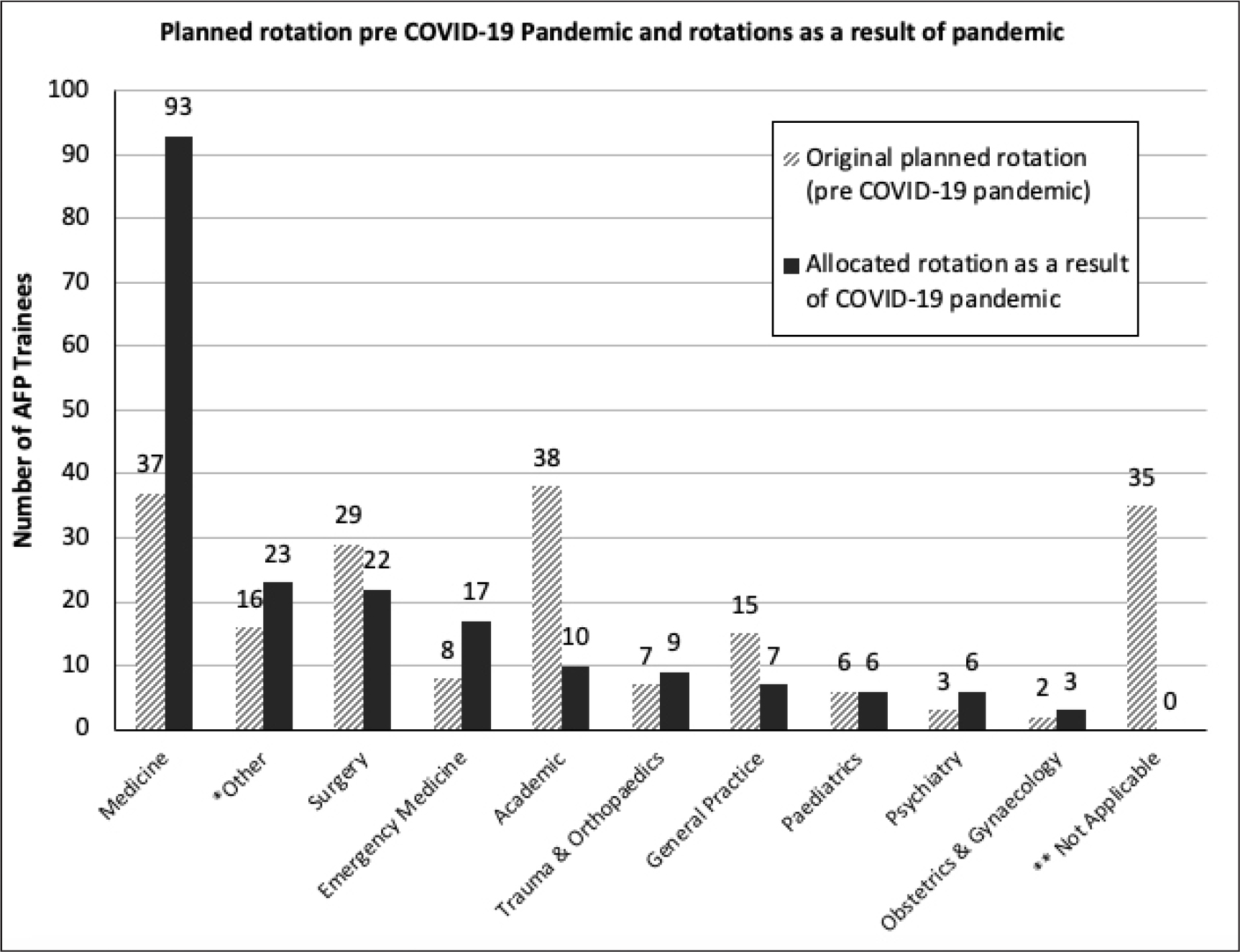
Figure 3. Illustrates AFP Trainees intended rotation compared to the speciality they were allocated during the COVID-19 pandemic. * Other included specialties such as: Rheumatology, Dermatology and Radiology ** Not applicable applied to those who rotated onto their planned rotation
|
Theme “Disruption to Academic Time” (Question 12 of Survey) Original survey question: If there is anything else regarding disruption to your academic time you would like to share with us, please detail it here. 73 comments were reported regarding disruption to academic time. 44 told us their “projects had been affected”. The described effects included; loss of academic time, increased clinical commitments and project cancellations. 34 respondents reported COVID-19 had a “negative impact on their training” with loss of key rotations for careers and training opportunities. 26 doctors described “feeling worried and or frustrated” with 16 reporting “cancellation” of conferences and courses. 12 doctors suggested the crisis had resulted in a positive experience for them, releasing time to focus on academic work and partake in novel research related to COVID-19. A smaller number (n=7) believed communication and leadership from foundation schools to have been poor. |
|
Theme “Any Positive Experiences” (Question 14 of Survey) Original survey question: if the answer to the above [question: Has the pandemic resulted in any positives for your academic work?] was yes, please could you detail what these positives are? We specifically asked doctors about positive experiences for academic work during the COVID-19 crisis. 49 comments were reported. Emergent themes included more time for focussing on current projects (n=14) with 23 replies around opportunity to partake in COVID-19 related research including randomization into national trials. One doctor designed and presented a poster related to COVID-19 at an international conference during this period. 9 doctors told us they had learnt new skills including the implementation of virtual learning, beginning management related projects, attending webinars and taking on a mentorship role for new interim foundation doctors. |
|
Theme “Overall Experience” (Question 15 of Survey) Original survey question: Please feel free to use the space below to share any experiences (positive and negative) that you have had during the COVID-19 pandemic relating to your academic work. The final question asked doctors to share any further positive or negative experiences during the crisis. Out of the 49 responses emergent themes identified were “guilt, anxiety and uncertainty (n=18)” relating to taking current academic time and for trainees’ future academic time and projects they had organised. 6 trainees voiced concerns regarding “career progression” due to loss of rotation and training in specialities they’re interested in. 12 doctors commented on “support and communication” with 4 reporting good support from supervisors, however the other 8 finding the opposite to be true. 15 trainees reported “cancellation/time lost” with frustration not been able to complete or start projects they have put a lot of work into. |
Discussion
Our survey results have demonstrated both positive and negative impacts of the COVID-19 pandemic on academic foundation training in the UK.
Maintaining time for academic activities is the most significant area to have been adversely affected. This time is important for AFP doctors developing their career portfolio. Skills gained can include gathering increased experiences as a teacher, researcher and leader. Our study has shown that academic time has been lost in more than half of all doctors taking part in the project due to redeployment and an emphasis on service provision. This is in line with a recently reported study [1] who understands that it is inevitable doctors will be forced to deal with novel situations and take on roles beyond the scope of their normal work during this crisis. Given that AFP doctors are a fundamental and large part of this workforce, it is not surprising that this cohort of doctors have been so significantly affected. As Ding and Zhang write, the priority has to be patient care and safety and we would concur with this. Nevertheless, our results revealed how much AFP trainees were affected with almost ? (31%) being very negatively affected losing out on their entire four month rotation and a large percent (40%) losing out on a weekly academic schedule. There was a clear disparity in how much doctors were affected with the trainees most negatively affected being those who lost out on a whole four month rotation of academic time. Free text comments relating to this topic revealed concerns about whether they’ll be able to get this time back and some doctors have expressed concerns about future career progression. The ultimate fear is the loss of academic doctors moving forwards, an area of concern widely reported [11].
We know that learner welfare is crucial and would argue that this is particularly relevant to our academic trainees. This includes valuing educational interests whilst maintaining safety and psychological wellbeing. Anderson et al [4] work recognized the above in their interviews with medical education leaders as trainee doctors were redeployed during the COVID-19 crisis and lost out on educational and training activities. In our study, almost all doctors reported losing out on educational activities (93%). This is an important area to focus on as we look to the future in a time when the facilitation face of teaching is changing and we implement more synchronous and asynchronous sessions in a virtual environment as an alternative tool. Foundation schools may require to develop a framework of academic education in order to provide adequately for this cohort of trainees; something that Anderson et al and Goh and Sandars have discussed at length in their work and might include the use of emergent technology for remote learning and teaching, flexibility in terms of time scales, “ad-hoc” sessions and also the creation of new opportunities in teaching and learning as a direct result of the pandemic. There will be ample opportunity for trainees to be involved. Indeed, our study has positively reported experiences by foundation trainees, grasping the chance to help implement new teaching methods in order to provide teaching. Not only has this kept the momentum, but it has also allowed trainees to develop as medical educators and leaders.
Despite difficulties for the vast majority of AFP trainees, the COVID-19 crisis has benefitted almost a quarter of doctors taking part in this survey; we believe it has been important to capture this data to celebrate success in developing competencies within the academic curriculum. Three emergent themes were reported:
1) Increased time to focus on current research projects 2) Participation in novel COVID projects and 3) Development of new skills including setting up virtual learning and leadership skills. We recognise that these opportunities have not been available for all, leading to inequity of training opportunities; free text comments expand further on this topic which we discuss below. However, even in the face of adversity, the uniqueness of this situation has, for some, generated valuable learning experiences.
The final question of the survey gave the opportunity for doctors to let us know about their overall experiences during this time period. The most commonly reported theme related to “lost time” with 22 doctors expressing their concern about this. In particular, AFPs in their first year have been concerned about the impact the pandemic may still have on their future academic time in the 2020–2021 rotation year and some AFP trainees felt if they had had academic time spread out through the year, the effects of the pandemic would have been lessened. The second most common theme was that of “despondency” with 10 doctors believing they were more disadvantaged than other academic trainees. 11 doctors reported to feelings of “worry and stress” expressing a sense of guilt if they took academic time and feeling uncertain about their academic future. It is important to address such anxieties if we are to retain our aspirational workforce of the future and also to look after the mental health of our workforce.
On the whole, doctors acknowledged the challenges faced by foundation schools when considering academic trainees during this crisis with kindness. The majority of trainees stated they were willing to sacrifice academic opportunities in light of the situation. Nevertheless, frustration was expressed especially along the themes of communication and forward planning. It is useful to receive such comments because as we move now past the peak and towards a potential second wave [10] we need to be prepared to put back into action a similar plan of contingency planning. The main concerns highlighted were poor communication and leadership from some academic foundation schools, losing out on whole academic rotations, not being able to complete academic projects, concerns over career progression and uncertainty regarding future rotations/projects. Addressing communication is achievable but promises about project continuation may be less concrete.
The questionnaire had a response rate of 17 % of all academic foundation doctors across the UK. It is not clear why some doctors chose not to take part but could be due to clinical pressures during this time, sickness or survey-fatigue. Although some foundation schools were not represented in the study, it is postulated that similar findings would be seen from these regions. We recognise the enormous disappointment of the cancellation of academic activities. However, one limitation of this study is that it was conducted at the height of the pandemic and thus it is unclear if some of these trainees were able to return to academic activities in the later phase of the pandemic.
Conclusion
This study has demonstrated overall limited availability of planned academic activity during the COVID-19 crisis. Whilst this is understandable, many doctors expressed concern about future unknowns with respect to their academic training. However, beyond redeployment and cancellation of projects, almost a quarter of doctors accessed COVID-19 research opportunities and capitalised positively during this difficult time.
Key messages
- There were both positive and negative impacts of the COVID-19 pandemic on academic foundation training in the UK
- There was disparity in how certain AFP trainees were affected - some were very negatively affected (losing out on whole four-month rotations), whereas others had only positive outcomes from the pandemic (actually gaining more academic time)
- It appears trainees most affected were the ones who lost out on a whole four-month rotation of academic time. Many have expressed concerns about whether they’ll be able to get this time back and have expressed concerns about future career progression.
- Core concerns regarded: poor communication from some academic foundation schools, losing out on whole academic rotations, not being able to complete academic projects, concerns over career progression and uncertainty regarding future rotations/projects
- Principal positives included: increased research opportunities related to COVID-19, opportunity to learn new skills (including setting up virtual learning and leadership skills).
- A number of AFP trainees currently in their first AFP year are concerned about the impact the pandemic may still have on their future academic time in the 2020–2021 rotation year.
Data availability statement: The data that support the findings of this study are available from the corresponding authors HC & MW, upon reasonable request.
Notes on Contributors
Helen Craggs is an Academic Foundation Year 2 Doctor at Royal Bolton Hospital NHS Foundation Trust, UK
Merlin Watts is an Academic Foundation Year 2 Doctor at Royal Bolton Hospital NHS Foundation Trust, UK
Natalie Walker is a Consultant in Acute Medicine and Academic Foundation Programme Director at Royal Bolton Hospital NHS Foundation Trust, UK
Paul Baker is Deputy Postgraduate Dean, Health Education England (North West of England School of Foundation training and Physician Associates)
Acknowledgment
We are grateful to all of the Academic Foundation Programme Trainees for sharing their experiences with us during this service evaluation.
References
- Ding A and Zhang Y (2020) Impact of cancelling foundation year rotations due to the covid-19 outbreak in the UK. Postgrad Med J p. 1–2. [View]
- Pushpinder Mangat, Keith Gardiner, Rowan Parks, Sheona MacLeod, Colin Melville (2020) Supporting the COVID-19 response: Plans for Management of Medical Training Rotations. NHS Health Education England General Medical Council. [View]
- Klasen JM, Vithyapathy A, Zante B, Burm S (2020) The storm has arrived”: the impact of SARS-CoV-2 on medical students. Perspectives on medical education 9: 181–185. [View]
- Anderson ML, Turbow S, Willgerodt MA et al (2020) Education in a Crisis: The Opportunity of Our Lives. Journal of Hospital Medicine 15: 81–83. [View]
- https://www.foundationprogramme.nhs.uk/wp-content/uploads/sites/2/2019/11/2019-Recruitment-Stats-and-Facts-Report.pdf
- Currie GP, Messeder S, Walker K (2018) The Scottish Academic Foundation Programme: What, why and how? Journal of the Royal College of Physicians of Edinburgh 48: 50–3. [View]
- Borrelli MR, Farwana R, Gundogan B, Al Omran Y, Pidgeon TE, Agha R (2018) How to apply for the academic foundation programme. Annals of medicine and surgery (2012) 29: 5–9. [View]
- Wendy Reid (2020) COVID-19 – supporting the NHS clinical response. Letter to medical academic trainees and medical trainees NHS Health Education England. [View]
- The UK Foundation Programme Office. Rough Guide to the Academic Foundation Programme. 2013. [View]
- Goh PS, Sandars J (2020) A vision of the use of technology in medical education after the COVID-19 pandemic. MedEdPublish [View]
- Sheridan DJ (2006) Reversing the decline of academic medicine in Europe. Lancet 367: 1698–701. [View]
Appendix 1 – Survey Distributed
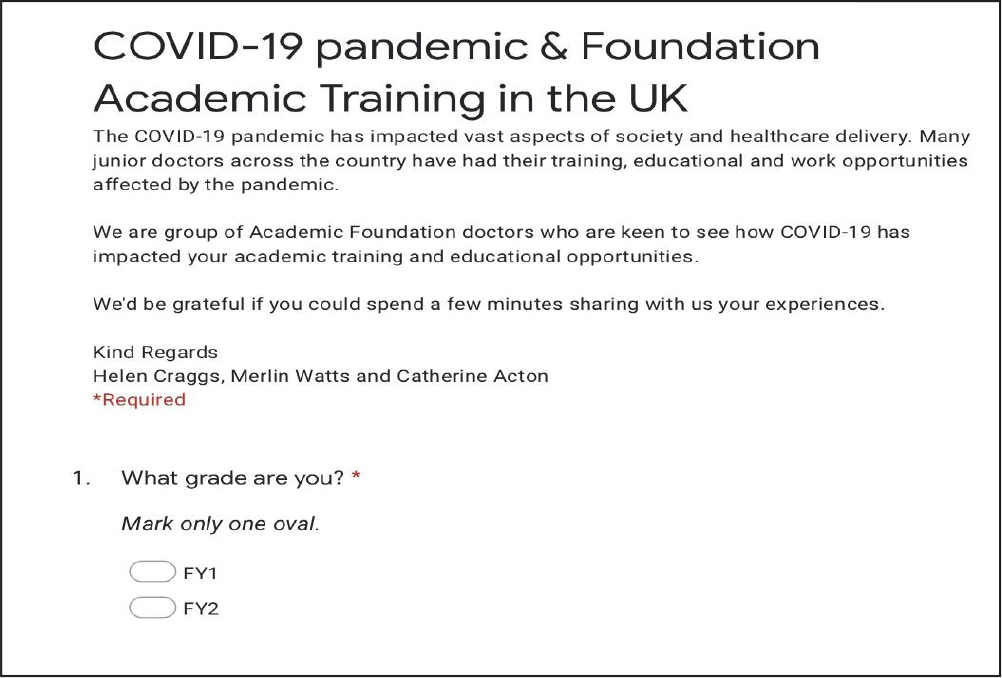
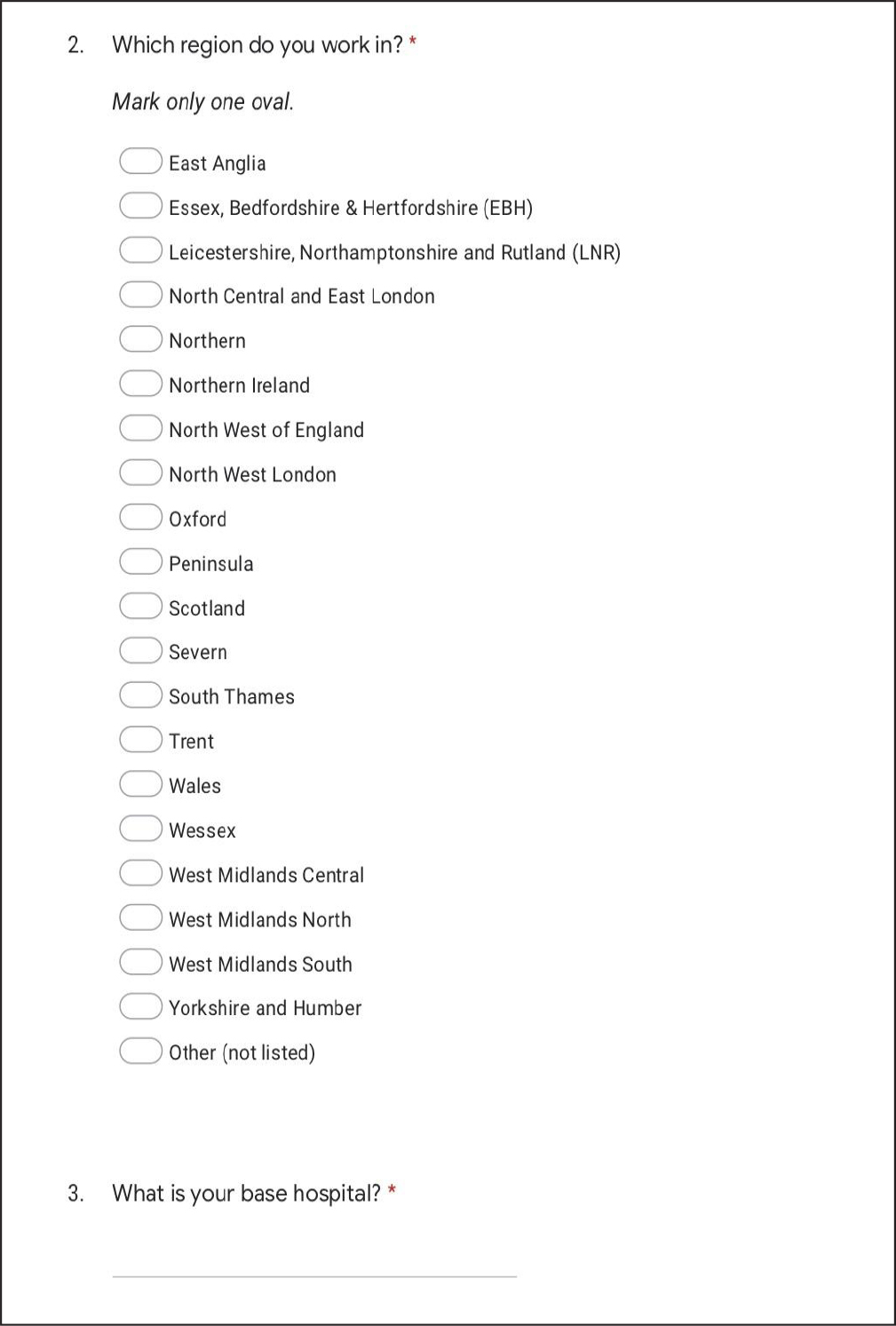
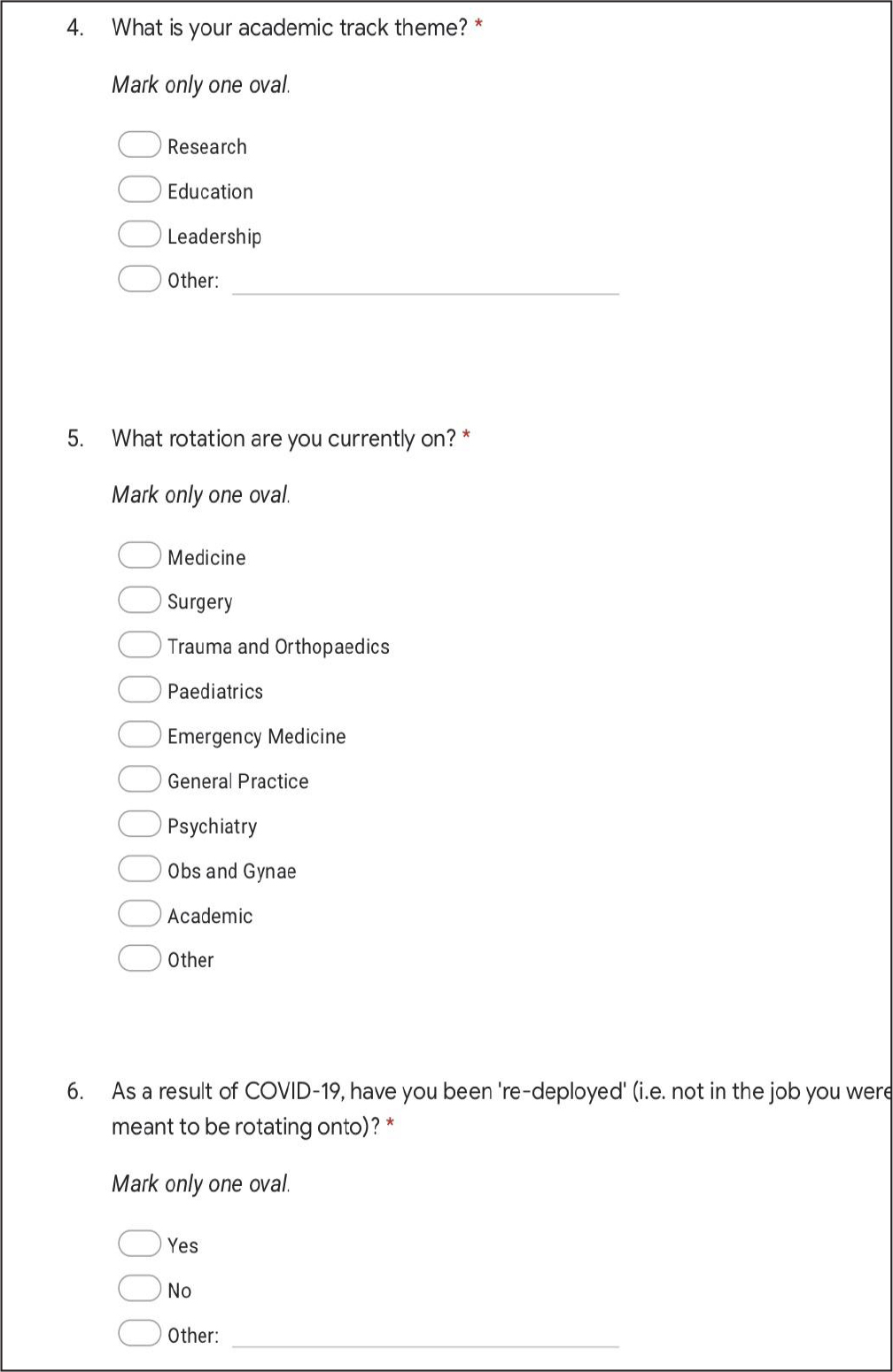
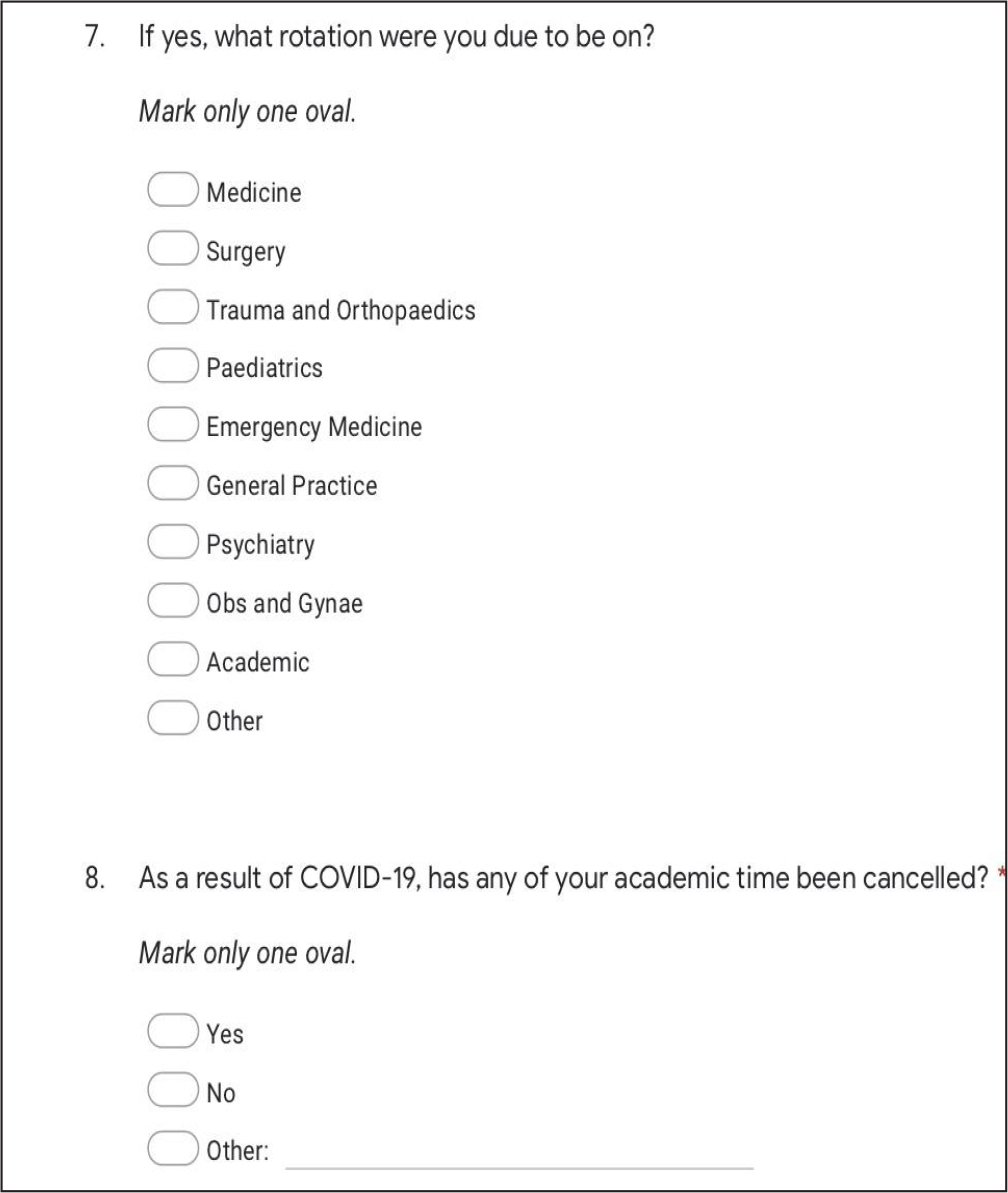
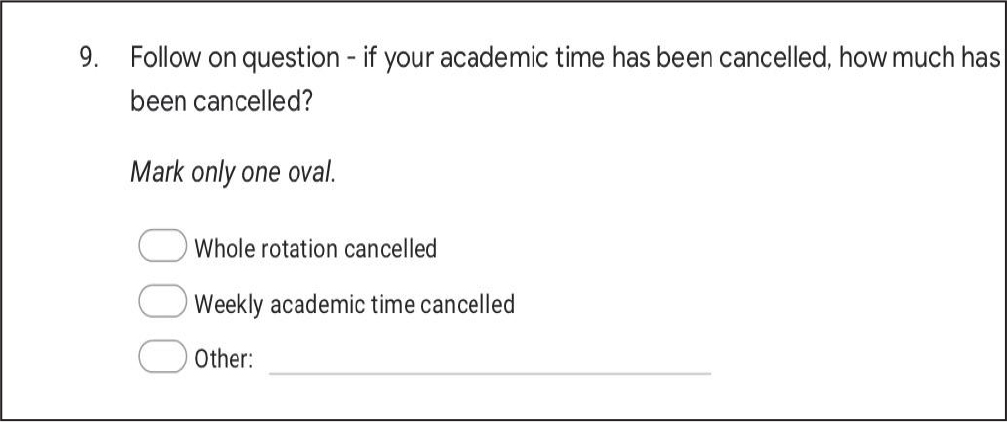
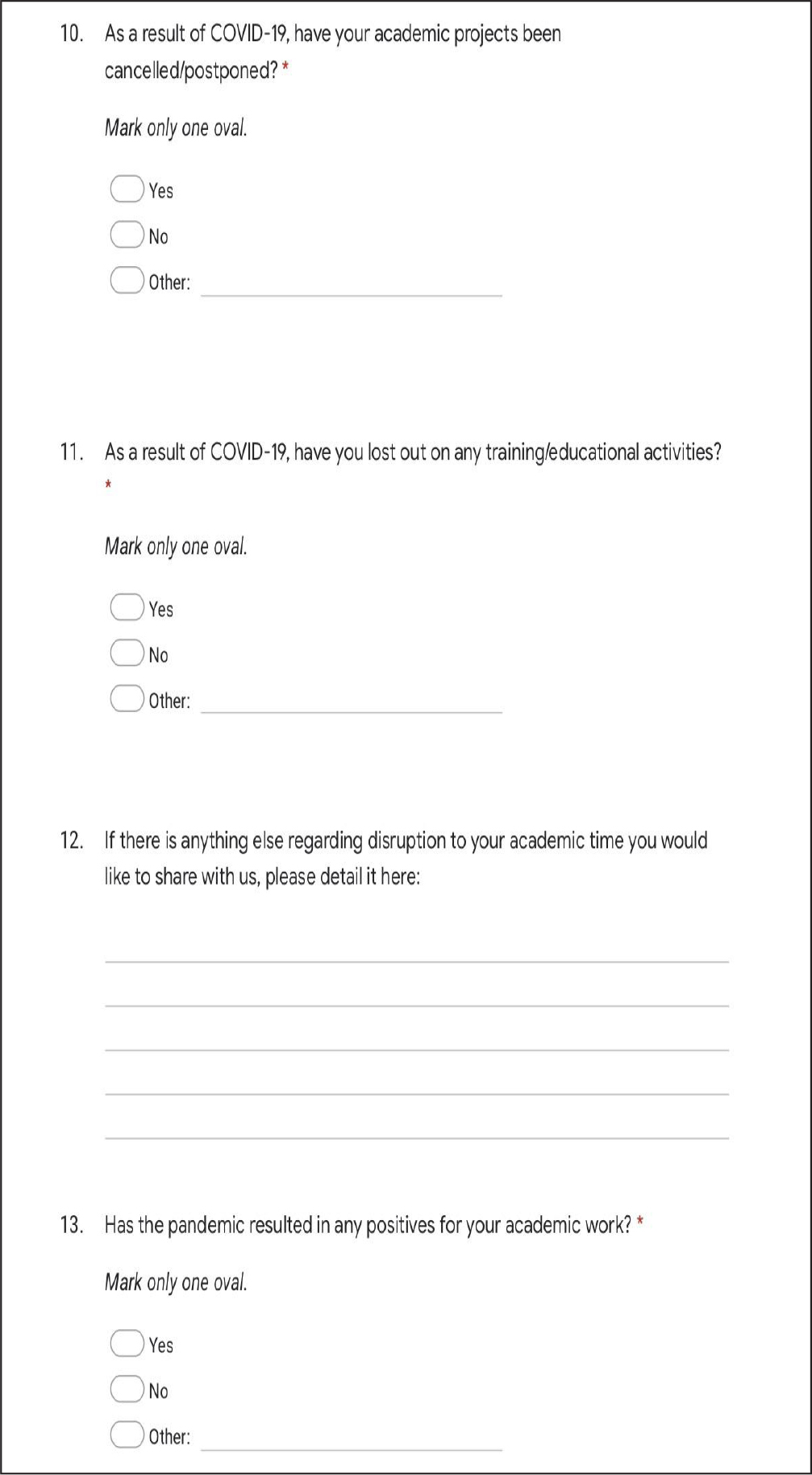
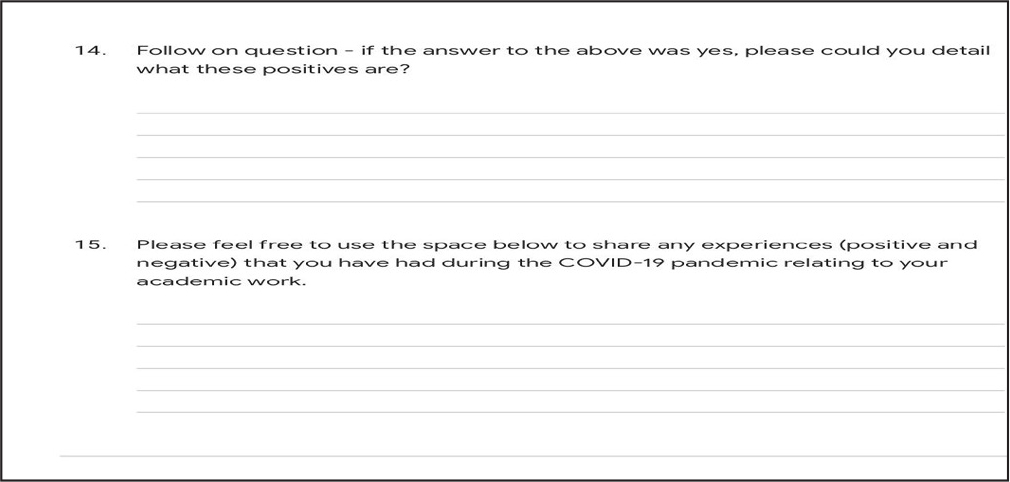
Appendix 2. (Summary Tables of Results Data)
Demographic Data
|
196/1130 (17%) individual trainee responses received 11/20 Academic Foundation School responses |
|
|
What grade are you? (FY1 or FY2) |
112/196 (57%) FY1s 84/196 (43%) FY2s |
|
Which region do you work in? (MCQ, select from one of 20) |
11/20 (55%) Deanery responses
|
|
Where is your base hospital? (Free text) |
66 Individual hospitals |
|
What is your academic track theme? (Research, Education, Leadership or other) |
143/196 (73%) Research 27/196 (14%) Education 22/196 (11%) Leadership 4/196 (1%) Mix of all three |
Rotation Data
|
What rotation are you currently on? (Free text option) |
Medicine 93/196 Other 23/196 Surgery 22/196 Emergency Medicine 17/196 Academic 10/196 Trauma and Orthopaedics 9/196 General Practice 7/196 Paediatrics 6/196 Psychiatry 6/196 Obstetrics and Gynaecology 3/196 |
|
As a result of COVID-19, have you been ‘re-deployed’/ not rotated (i.e. not in the job you were meant to be rotating onto)? (Free text option) |
155/196 (79%) Yes 32/196 (16%) No |
|
If yes, what rotation were you due to be on? (Free text option) |
Academic 38/196 Medicine 37/196 No Response 35/196 Surgery 29/136 Other 16/196 General Practice 15/196 Emergency Medicine 8/196 Trauma and Orthopaedics 7/196 Paediatrics 6/196 Psychiatry 3/196 Obstetrics and Gynaecology 2/196 |
Academic Data
|
As a result of COVID-19, has any of your academic time been cancelled? (Yes, No, Other/free text) |
99/196 (51%) Yes 77/196 (39%) No 20/196 (10%) Other |
|
Follow on question - if your academic time has been cancelled, how much has been cancelled? (Yes, No, Other/Free text) |
49/121 (40%) Weekly academic time 37/121 (31%) Whole rotation 35/121 (29%) Other |
|
As a result of COVID-19, have your academic projects been cancelled/postponed? (Yes, No, Other/free text) |
103/196 (53%) Yes 76/196 (39%) No 17/196 (9%) Other
|
|
As a result of COVID-19, have you lost out on any training/educational activities? (Yes, No, Other/Free text) |
183/196 (93%) Yes 7/196 (4%) No 6/196 (3%) Other |
|
Has the pandemic resulted in any positives for your academic work? (Yes, No, Other/Free Text) |
148/196 (76%) No 48/196 (24%) Yes |